Linda Merrilees with Quilla and Fuji I'm pleased to announce our newest LightRider Bitless Ambassador as Linda Merrilees with Quilla and Fuji from NSW, Australia. "I discovered LightRider bridles (through my coach) after unsuccessfully trying other styles, and my mouthy, sensitive boy said "YES!" Since I start all my horses bitless, it was a smooth progression to riding with a mindful connection that the rope halter just didn't offer. The versatility of being able to purchase a bitless noseband to fit an existing bridle is great! I have two western bridles and the match has been perfect and I get plenty of positive comments. The quality and softness of the leather and the workmanship is first-class. After a 'former' competitive riding career consisting of Pony Club, Western (with the AQHA), Eventing, and Dressage I took up horsemanship nearly 25 years ago and have continued learning and evolving from being more skills-based to becoming more interested in the connection. These days we enjoy the trails, Clicker/trick training, regular Ladies' Days, and the occasional dabble into Working Equitation and Western Dressage with perhaps some Mountain Trail and Ranch Riding in the future. I'm really looking forward to sharing the joy and understanding I have with my horses by being a Light Rider Ambassador! Read about and see more pics of all three ambassadors here: LightRider Ambassadors Page
0 Comments
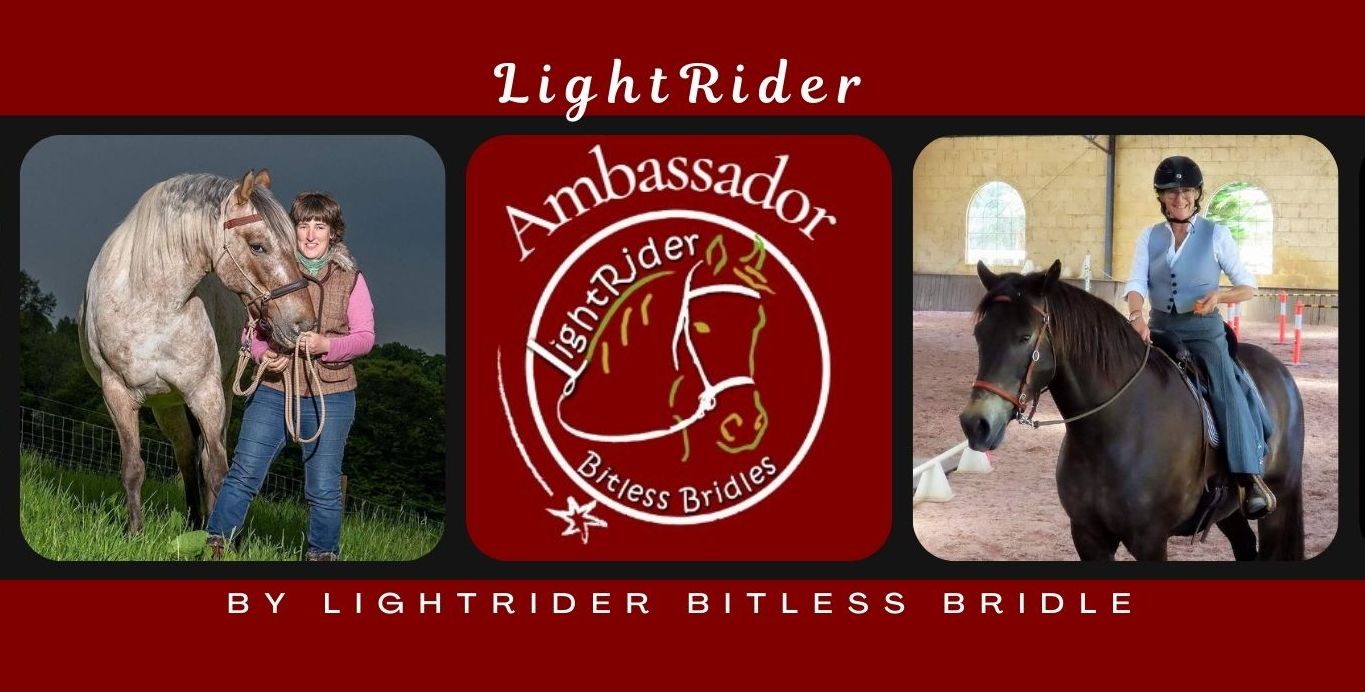
Melissa Guest and Bucky from Western Australia and Karen Inkster with Monty from Scotland, UK. 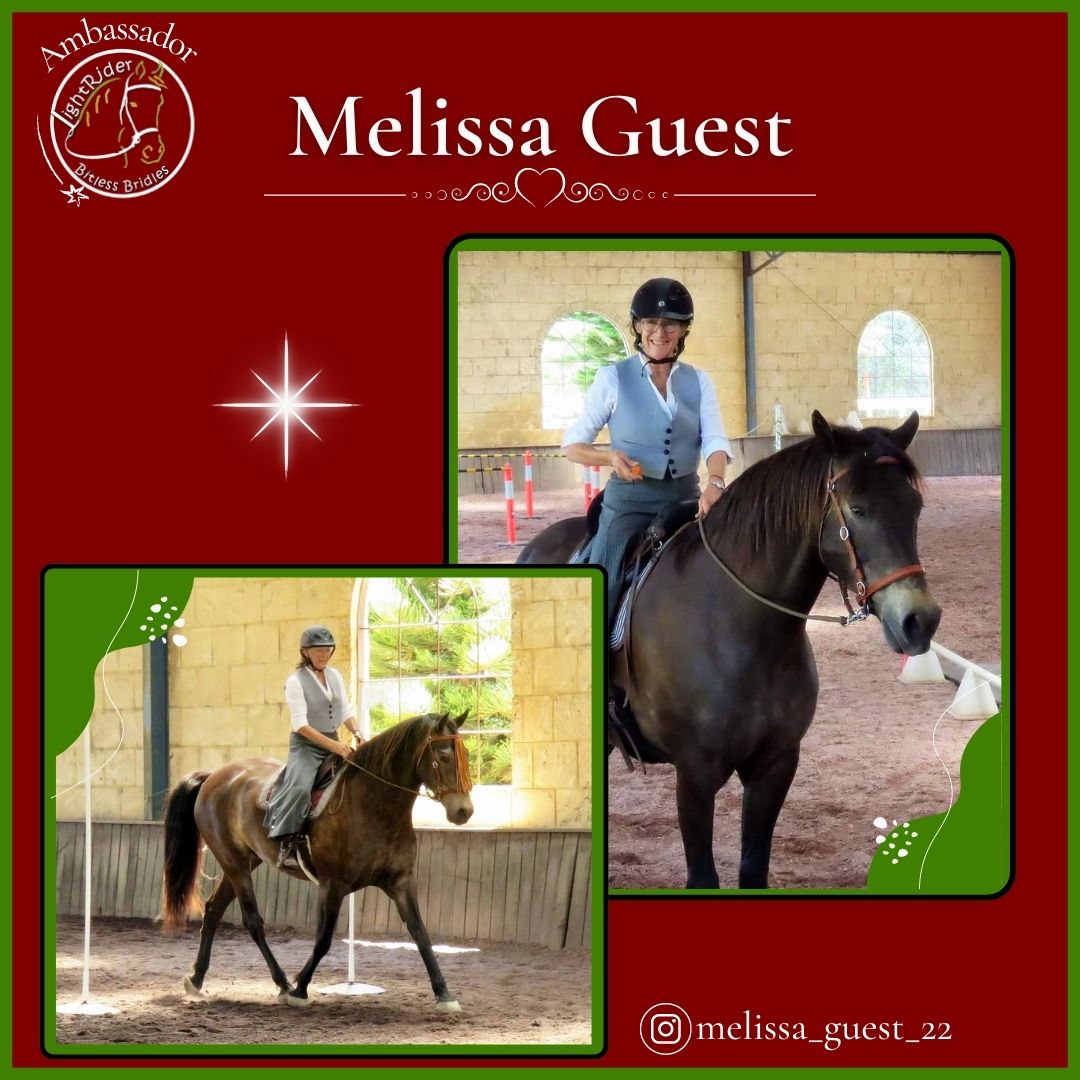 Melissa and Bucky Bucky was 10 this year. He is a purebred Morgan gelding. His official name is Hodgson Park Buckingham. Bred by Rachel Whan in the Swan Valley. Bucky came to me when he was 16 months old and settled well into our herd of four. I started Buck slowly, slowly, first by ponying him out for short bush rides building up as he grew older. Everything we did together was slow and steady; he was and is an eager learner. I have been riding bit-free for around 20 years. Two of my horses, both Arabians, prior to coming to me, were ridden with bits, including a worried little endurance horse who was a serial bolter. Both transitioned well and happily to bitless. My first bitless bridle was a crossunder with my first Arabian, Harry. Starting him in endurance I thought it more practical to ride without a bit allowing him to eat, drink and breathe better. I never looked back. For endurance, I used the rope LightRiders, practical, soft, and easy to clean. I have tried several bitless bridles but always came back to the LightRider. My horses went well in them. They worked and my horses were willing and happy. When starting Buck I used just the rings for the side pull, then progressed to the chinstrap rings. I find he is softer, goes kindly, and is responsive using the chinstrap, once understood, gives a clear, softer direction. Buck is ridden in a leather stock horse Light Rider. As bitless riders, we are restricted to what we can compete in. Through being bitless, my eyes have been opened to several exciting and challenging disciplines that embrace bitless horses. Horse Archery, Working Equitation, and Western Dressage, all Buck and I thoroughly enjoy. There are many complex moves in both Working Equitation and Western Dressage, the LightRider is clear, and kind and encourages the horse to work in a healthy frame both in body and mind. 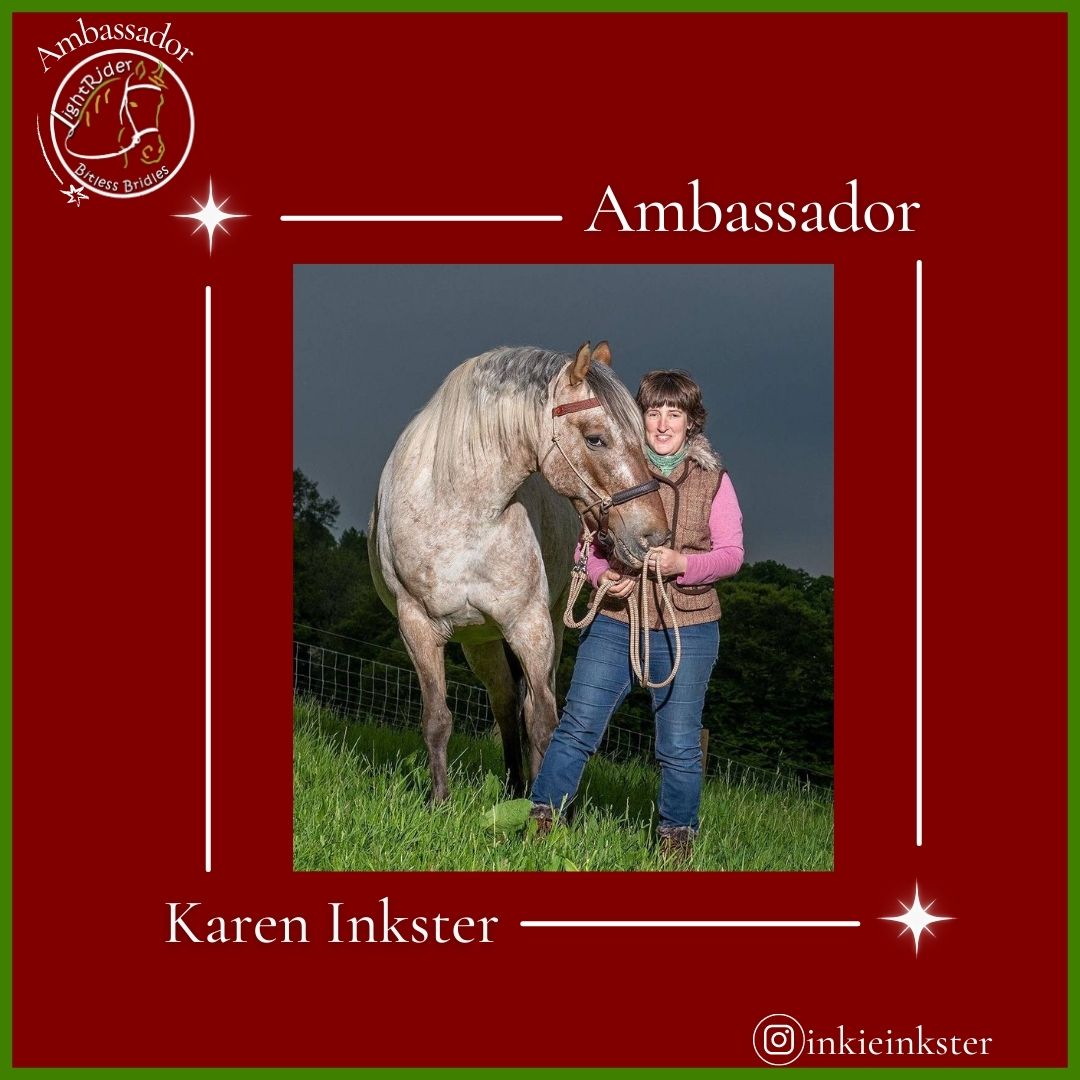 Karen and Monty (photo credit: Craig Cantwell). When I was a teenager, I read a book about a lady who did endurance and cross country without a bridle, and I thought WOW! It got me thinking about what a bit may feel like to a horse, how we traditionally control a horse and what type of relationship you could achieve without the use of a bit. When I returned to horses some 20 years later and got Connie, she came with a snaffle bridle. I hated putting the bit in her mouth and it made me quite uncomfortable. Very quickly I replaced the bit with a bitless hackamore attachment. The more training I did with her and the better rider I became, I replaced the traditional hackamore with a LightRider bridle. I love having such a good relationship with my horses that I can ride in a side pull and never feel out of control. I love the LightRider bridles as they come in so many different options and are so kind to the horse. I use the Western Bitless Bridle for western riding, shows, and competitions. I love the rope Performer Bridle as it is so versatile, you can use it as a headcollar or use it as a bridle with the reins attached underneath or clip them on the side of the noseband. It's my go-to bridle, especially when trail riding and doing long-distance trails as it takes up no weight and packs down really well. Monty is a 12 yo, Spanish Mustang and sadly a very damaged horse. He came to me aged 7 and over the next few months, it became apparent his behavior was extremely challenging. Doing some research, I found out he had been to approx. 15 different homes. He is a great liberty horse and loves doing tricks and working and he is also a good pack horse. At the moment he isn't ridden, but I hope one day to be able to ride him, but only if he is happy with me doing so. Karen also uses the LightRider bridles on her mares Connie and Jess. Connie is a 17-year-old standardbred and is my soul mate. I can ride her without a bridle and just in her LightRider Bareback Pad. Connie's main love was cross country, and we were just getting up to British Eventing standard when she was sadly diagnosed with bone spavin. I used to love it when she was placed 1st wearing a bitless bridle when others were wearing harsh bits and still struggling to hold their horse. Jess is a 12-year-old appaloosa and came to me after being rescued and in bad shape. I spent 12 months doing groundwork with her and ponying her out with my main mare Connie before backing her. She is now becoming a wonderful ridden horse and it's so nice knowing her whole ridden career has been bitless! If you want to be considered as a LightRider Ambassador post some great pics/reels featuring your LightRider Bitless Bridle and/or bareback pad, and use the following hashtags:
#lightriderbridle #lightriderbitless #lightriderbitlessbridle #Lightriderbareback so we can see you're flying the bitless (and/or bareback) flag. You are also welcome to send me a message. 🙂 To keep up with more Ambassador announcements follow us on Facebook or on Instagram.  Cynthia and Manny and jumping bridle-less with a neck rope. Photo Credit: Nadeen Davis. Are you aspiring to ride bridle-less, or progress to liberty, or just need some extra support when riding? A neck rope or cordeo is the ideal tool to help you develop finesse and refined control. Neck Ropes and cordeos are very similar pieces of equipment with variations in material and the way they’re used. Traditionally, a neck rope is used in more relaxed, western types of riding with a single hand. A cordeo is often a simple (or quite fancy) neck strap that is used with two hands in more English-oriented disciplines or as a support for jumping and beginner riders. Both are ideal tools to help you and your horse learn refined communication together. It helps you to use mind, body, and legs before your hands, and your horse learns to follow those earlier cues. This leads to harmony, lightness, and an enviable relationship with your horse. Principles to learn The neck rope will teach you the principle of “less is more” and you will discover how to communicate without using constant or controlling pressure. It’s important to keep the neck rope in a low position on the neck so you’re not harming the horse’s windpipe, especially if using it for support. That said, you can slide the rope up the neck a little to indicate direction during the initial training. Keep the pressure light and rhythmic rather than a constant feel. Return to a neutral low position when the horse responds. This post on common mistakes when riding bridleless shows exactly where the neck rope should sit and some pitfalls to avoid. 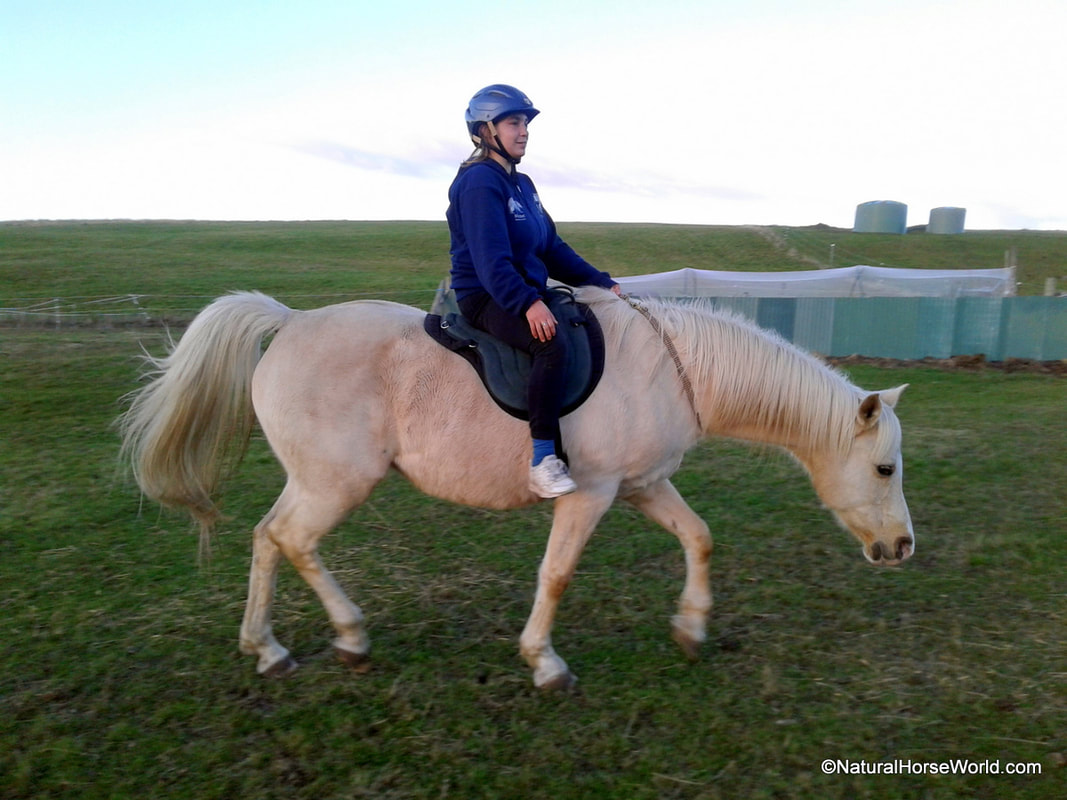 Neck Rope riding can teach both horse and rider to relax. Photo Credit: Cynthia Cooper. Leading with a neck rope Before leaping into the saddle with a neck rope, it can help your horse understand the new aids by using it on the ground first. Clip a light rope to the neck rope and use it in conjunction with the halter and rope to start transitioning to the feel of the pressure and aids applied to the neck. Another benefit of using a neck rope is you can almost never force the horse into doing what you want. It gives the horse freedom and choice, teaching us to listen to the horse first. Neck ropes are also used for refining groundwork, transitioning to liberty, or during a photoshoot where you want minimal headgear. 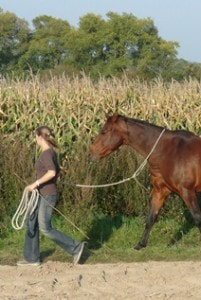 Leading with a neck rope can be a good preparation for riding with one. Photo credit: Karine Vanenborre More uses. They can help beginner riders, support you in an uphill climb (especially if your horse has no mane), and stabilize your hands during jumping rather than grabbing on the head if you lose your balance. They are also the best tool for transitioning to bridle-less riding. A neck rope serves both as the initial cue prior to the horse listening exclusively to your seat and legs, and as a backup cue if needed. Ideally, you will have taught your horse to yield his hind end to disengage the hindquarters as a means of control. Remember, safety always comes first and it’s highly recommended to only use a neck rope in a controlled environment (smaller fenced area, arena, or yard) especially in the early stages. Use a neck rope in conjunction with other headgear (and a helmet on your head!) as a backup. Read about one rider’s experience of using a neck rope for the first time here. 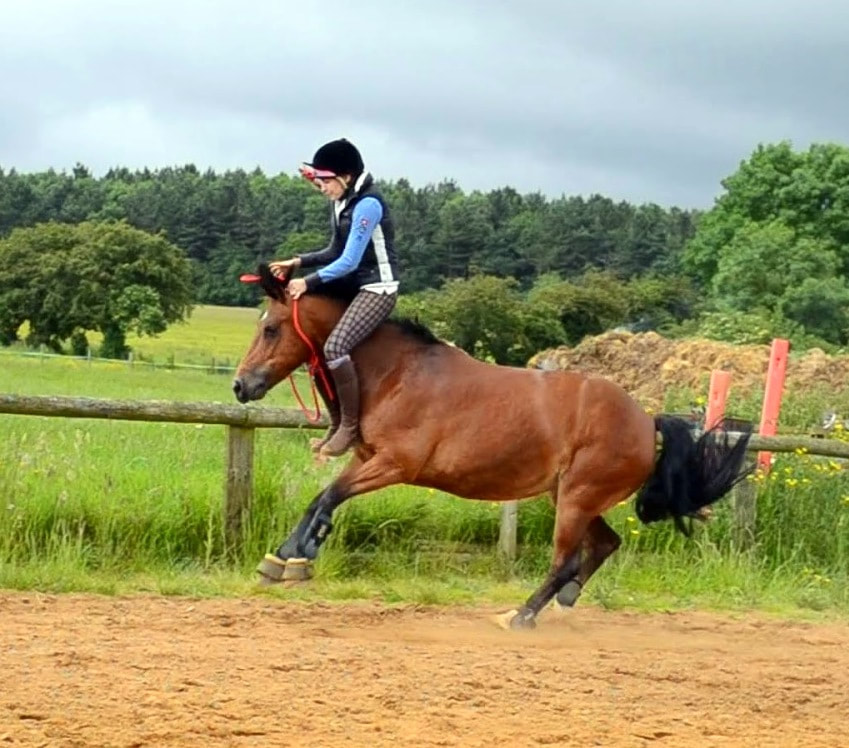 Riding with a neck rope can be a real test for an independent seat! Photo Credit: Elsie May Click on the photo below to buy a LightRider Neck Rope. 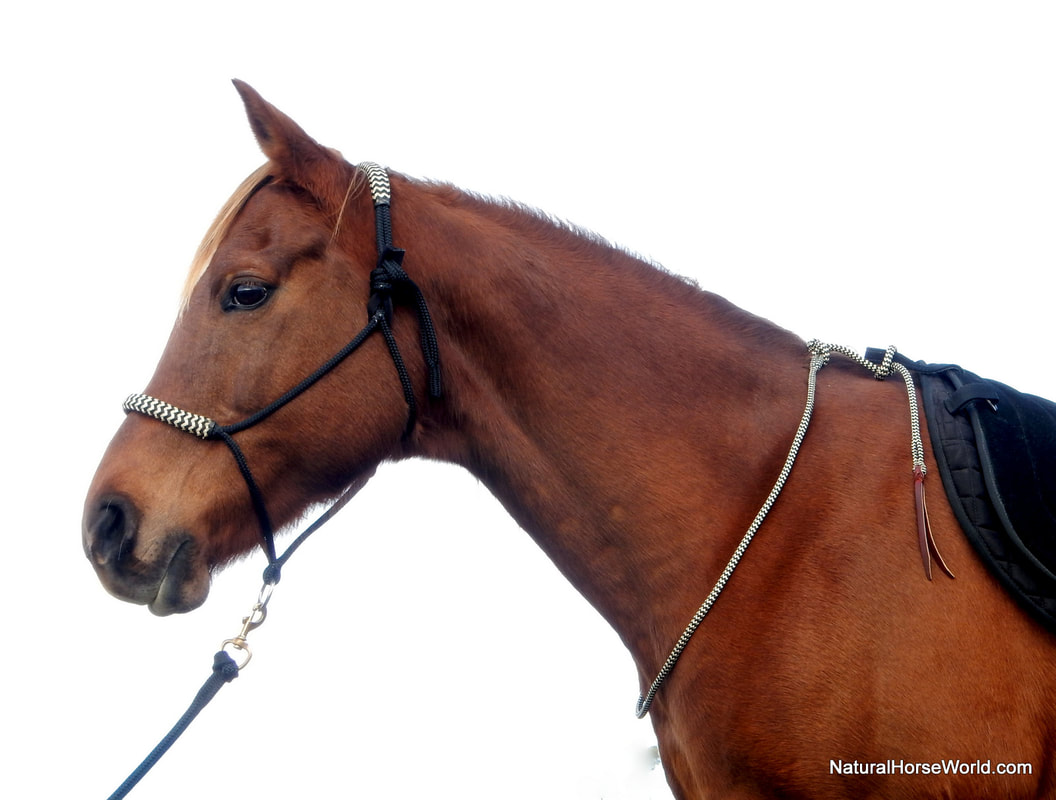 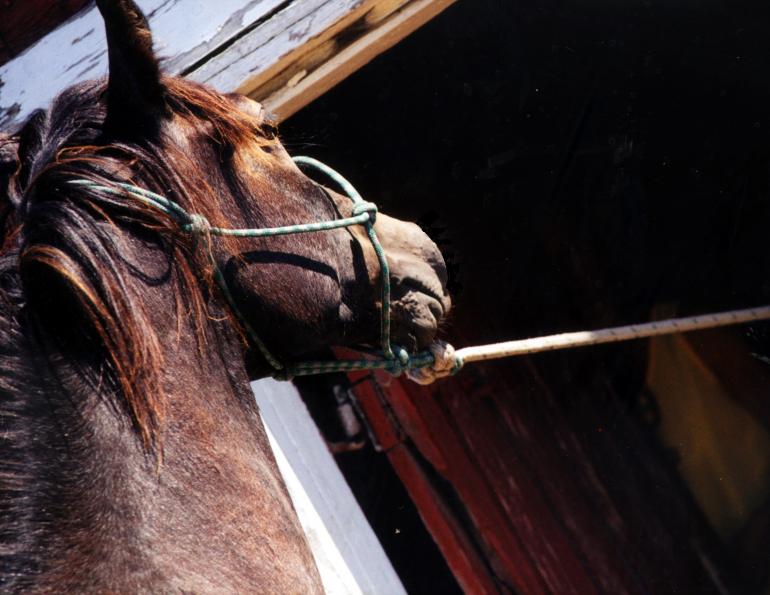 Did you know you can have safer rope halters and bitless bridles with a simple breakaway point? Have you ever thought about what would happen if your horse caught their rope bridle or halter on something solid – like a gate latch, or a hitching rail, or tree branch? Rope bridles and halters without a break-away point are a serious wreck waiting to happen! I’ve seen horses almost drown from getting a leg caught up in their reins while swimming, and a horse strike their hoof through another’s reins and join the two together in a serious tangle until the rein clip broke. I’ve known two horses that plunged off a narrow cliff trail when one slipped and dragged the horse who’s saddle he was tied to, with him. Fortunately, the rider survived and was able to euthanise both horses. Rope hackamores used by Natural Horsemanship trainers and riders have a solid rope rein that can be deadly if caught up. And what about the horse that escapes with un-breakable rope reins dangling? Imagine the serious wreck when a front or hind leg steps through those reins, especially when still around the horse’s neck. The same goes for a rope cordeo or neck loop that has no breaking point. If it falls close to the head a hoof could potentially get caught in it. Using something like this breakpoint tether will help keep the neck rope in place. And how many neck and back injuries are caused by pull-backs when tied solid? We’ve all had those and perhaps changed to a different method of tying, or used a releasing gadget or a piece of twine! Obviously, it’s best to educate your horse to stand tied but you still can’t account for needing to tie your horse somewhere different, or that sudden scare factor. You can make your own break-away tab with scrap or re-purposed leather.This all paints a horrible picture but can be avoided by using a break-away tie on the headpiece of your rope halter/hackamore/bridle. You can make your own as demonstrated here on Horse Nation. 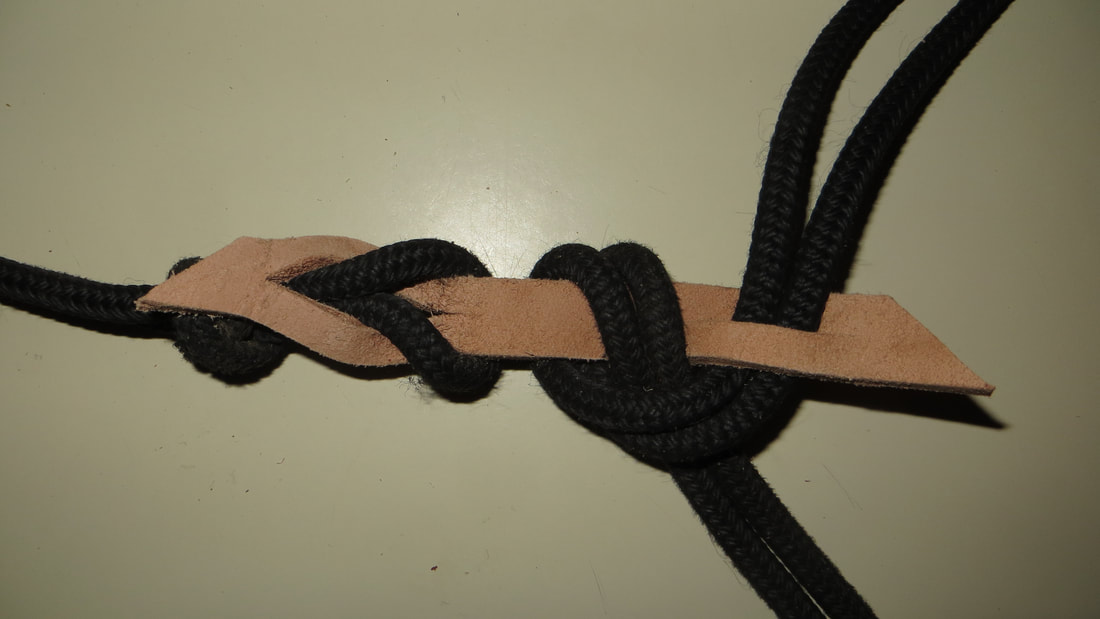 Or buy a ready-made break-away latigo from Natural Horse World here. How to use a leather latigo as a breakaway tie: Many rope halters come with a leather latigo attached under the jaw so here’s how to remove that and use it as your break-away latigo.
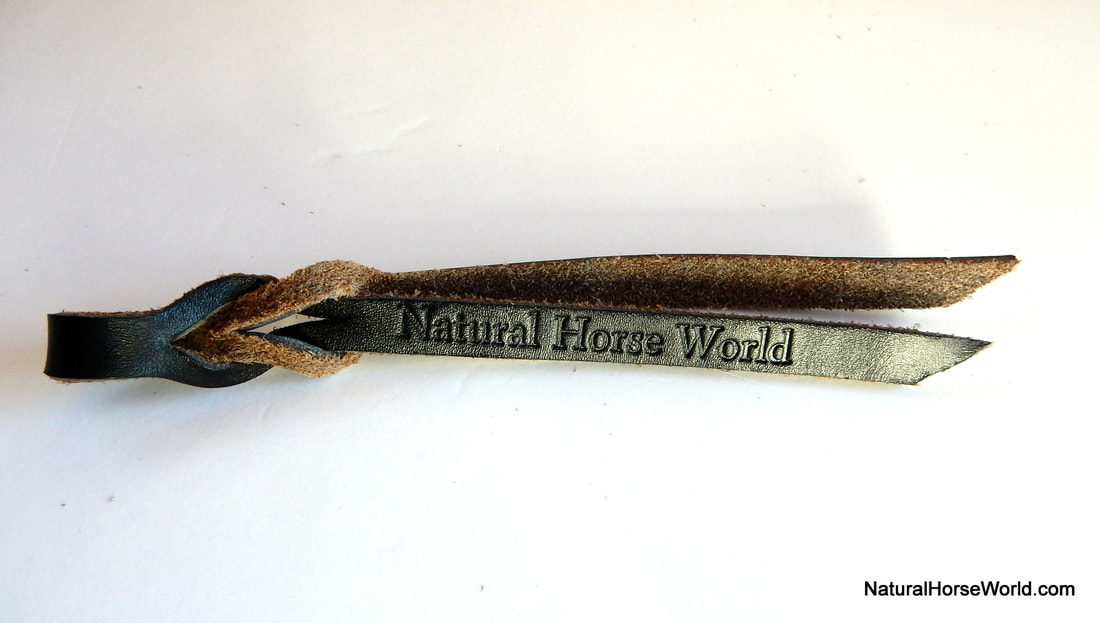 Here’s a video to show how it’s done:LightRider Bitless Rope Bridles are the first to include a breakaway latigo, as are the Supersoft Knotless Rope Halters sold exclusively by the Natural Horse World Store. 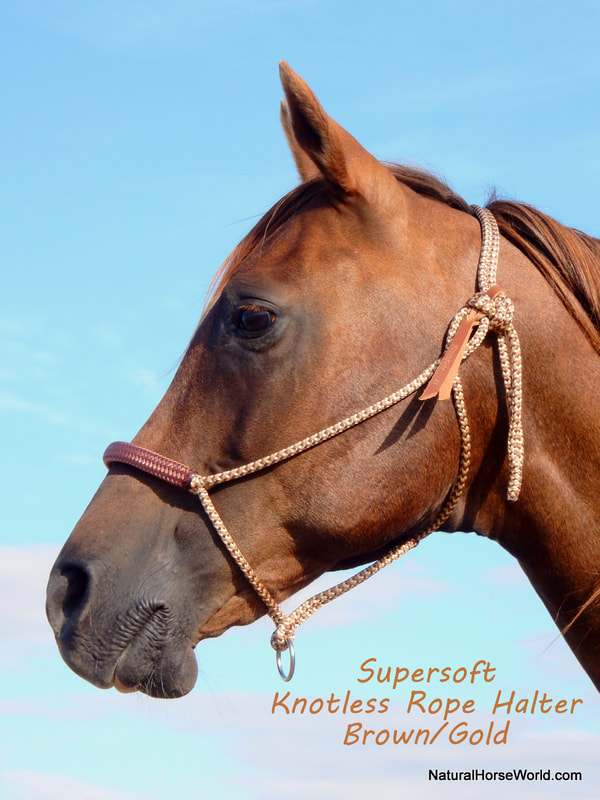  To celebrate World Bitless Horse Day this Saturday - 7th September, we're having a 10% off all bitless bridles sale. Plus 50% off older style bridles - English and Stockhorse in brown biothane, warmblood size nosebands in brown biothane and some leather bridles in warmblood size. These bridles are brand new - they just have the older style cheek pieces without the extra buckle to fit a bit or remove the noseband. https://www.naturalhorseworldstore.com/categories/Bitless-Bridles/ Win a LightRider Bitless Noseband by sharing your review on the LightRider Facebook page to go in the draw for a Bitless Noseband of your choice - value $55+ (includes shipping). WORLD BITLESS HORSE DAY - SEPTEMBER 7TH See all the activities listed here and find out more about this day here. Win Bitless Ambassadors Rosettes to 3rd place. *** SPECIAL PRIZE *** for first place! Enter your bitless horse photos here. WIN A LIGHTRIDER BITLESS NOSEBAND We invite you to share your review on the LightRider FB page to go in the draw for a LightRider Bitless Noseband of your choice - value $55+ (includes shipping). 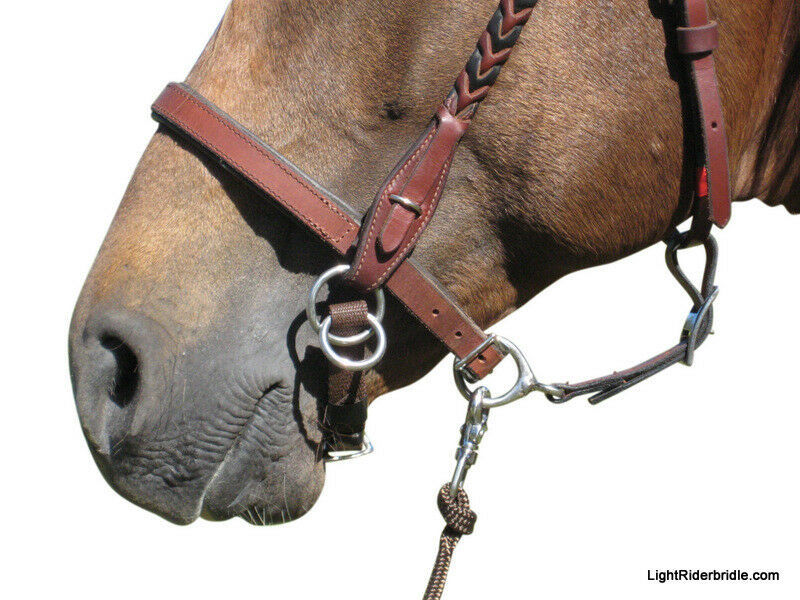 |
 At Equitana AuthorHi, I'm Cynthia Cooper - inventor of the LightRider Bitless Bridle. Subscribe here for LightRider Tips and special offers.
(your email will never be shared and we don't spam). Categories
All
Archives
May 2023
|

 RSS Feed
